Levelling
Measure the fall across the whole footprint with a long board and a level. Under two inches, you can usually set the frame and move on. More than that, cut into the high side rather than filling the low side: fill settles, and a leg sinking an inch twists a frame that was square on the day.
If the ground stays wet, dig a shallow bed of crushed stone under the footprint before you start. Wet grass under a slide exit is where lawns die first.
Anchoring
Four anchors, one per leg, driven at an angle leaning away from the frame so the pull works against the soil rather than with it. Bolt through the leg, do not screw into it. Check them after the first month: new soil compacts and an anchor that was tight in May will take another half turn in June.
A set on a deck or patio needs a different approach — through-bolts into the structure, not soil anchors. If you are in that situation, measure twice and over-specify the fixing.
Surfacing
Nine inches of loose fill is the working number: engineered wood fibre, rubber mulch or pea gravel. Extend it six feet past the structure in every direction and further off the end of a slide. Edge it with timber or a buried border so the fill stays where you put it.
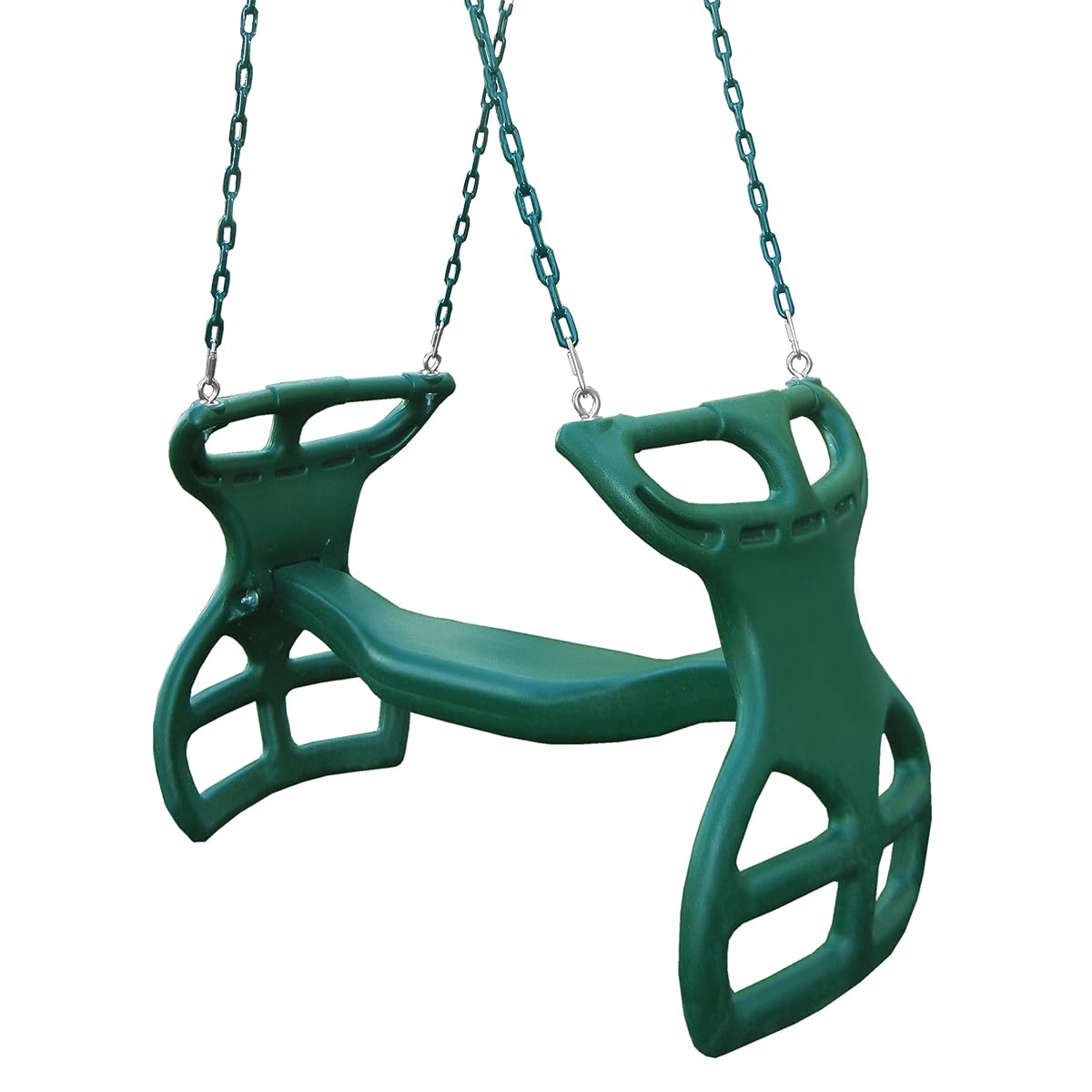
Rake it back under the swings every few weeks during the season. The hollow that forms under a swing seat is exactly where the fill needs to be deepest and exactly where it is thinnest by August.